Do you often find yourself lying in bed at night, tossing and turning, wondering if there’s a way to transform your sleep experience? You’re not alone.
In our increasingly tech-driven world, the integration of smart technology into bedrooms is swiftly transforming how we approach sleep.
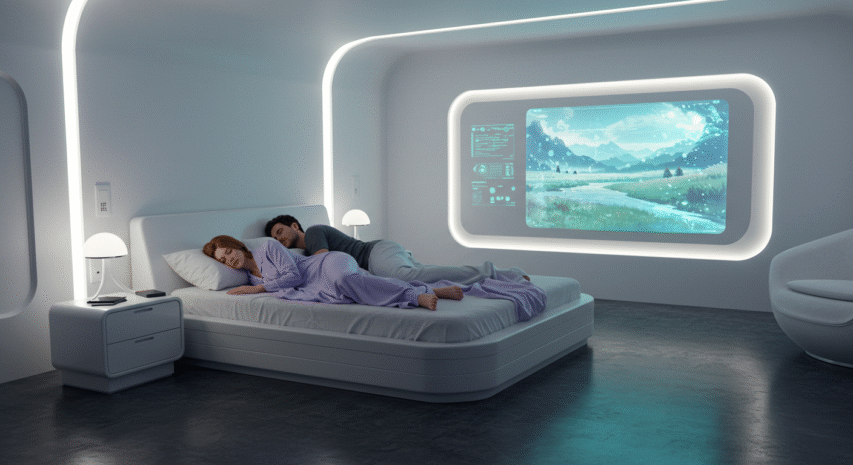
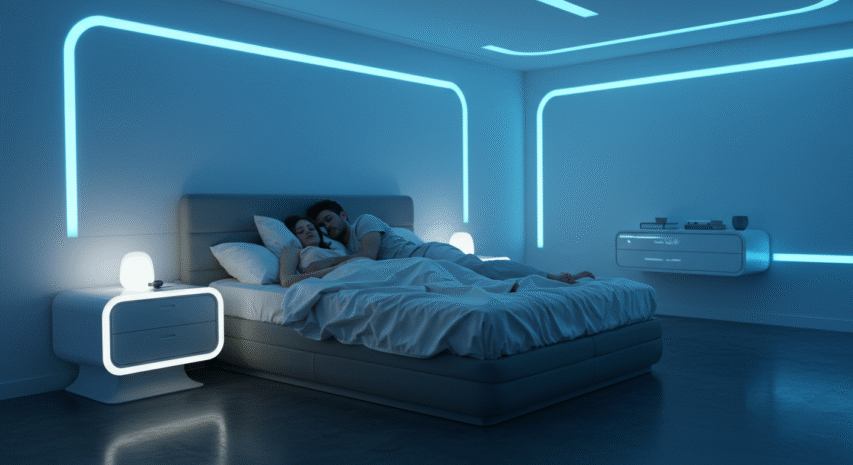
Sleep tech smart bedrooms promise a future where rest is optimized, personalized, and closely monitored, making the mystery of night-time restfulness a thing of the past.
Let’s delve into this digital revolution and see how technology can enhance our nightly retreat.
The Evolution of Sleep Technology
Sleep technology has come a long way from simple alarm clocks and adjustable beds.
What we’re witnessing today is an intricate dance between science and innovation. Modern sleep tech constitutes various gadgets designed to optimize rest, right in the comfort of our own bedrooms.
The overarching aim? Enhancing sleep quality, reducing insomnia, and understanding sleep patterns better.
These developments have the potential to change our longtime relationship with sleep.
Innovation
Description
Impact
Smart Mattresses
Adjust their firmness based on body pressure.
Improves comfort and sleep quality.
Sleep Trackers
Monitors sleep cycles and disturbances.
Provides insights to optimize sleep habits.
Smart Lighting
Adjusts to mimic natural sunlight.
Regulates circadian rhythms for better sleep.
Thermostat Controls
Automates room temperature for ideal sleep conditions.
Promotes deeper sleep phases.
How do Smart Mattresses Work?
Smart mattresses epitomize the intersection of comfort and technology. Imagine a bed that knows how you like to sleep and adjusts accordingly.
These mattresses come equipped with various features such as built-in sensors that monitor your movements, heart rate, and essentially how your body interacts with the surface.
Based on these metrics, they adjust their firmness or even temperature, ensuring optimal sleep conditions throughout the night.
Moreover, some smart mattresses have the capability to alert you if you toss and turn excessively, which may indicate stress or physical discomfort.
This feedback allows you to make informed decisions about your sleeping environment and daily activities that might affect sleep.
“Good sleep needs the right conditions, and smart tech is here to provide just that.“
Sleep Trackers: From Data to Restfulness
In an era where data dictates decisions, sleep trackers have entered the personal health sphere with a bang.
These devices, whether in the form of wristbands or smartwatches, are designed to collect data that can help demystify your sleep.
They track everything from sleep duration to the various stages of sleep, including REM and deep sleep.
With detailed graphs and personalized insights, users can uncover patterns that might be hampering their sleep.
Perhaps those midday coffees are cutting into your ability to reach deep sleep, or maybe late-night screen time is dragging down your REM cycles.
With this data, you are better equipped to adjust habits and potentially enhance sleep quality.
The Role of Smart Lighting in Restorative Sleep
Lighting plays an underrated but crucial role in how well you sleep. Smart lighting systems are designed to mimic natural light cycles.
By adjusting the intensity and hue of indoor lights, these systems help regulate our circadian rhythms. This is particularly useful if you’re someone who struggles with the dissonance caused by artificial lighting, which can often trick your brain into thinking it’s still daytime.
These systems can gradually dim lights as bedtime approaches, easing you into a restful state.
In the morning, they can simulate sunrise, helping you wake up more naturally and feel more refreshed.
The seamless integration of smart lighting helps create an environment conducive to both sleep initiation and wakefulness, making it easier to maintain consistent sleep patterns.
Smart Thermostats: Perfecting Sleep Environments
Temperature is another vital element that influences sleep. Smart thermostats can regulate the temperature of your bedroom according to your preferences and even change throughout the night to align with your sleep cycles.
Cooler temperatures promote deeper sleep, and smart thermostats can be programmed to ensure your bedroom maintains the ideal sleep environment.
By analyzing your sleep data in conjunction with room temperature, these devices can optimize conditions to prevent overheating or feeling too cold, common sleep disruptors.
Over time, the combination of smart thermostats and personalized data can dramatically improve sleep quality and, consequently, your daily energy levels and cognitive performance.
Security Features in Smart Bedrooms
A common concern with the proliferation of smart devices is security. Fortunately, smart bedroom technology is keeping pace with these concerns, offering robust security features.
Many devices come with encryption protocols and require secure logins, making unauthorized access difficult.
However, security does not solely refer to data protection but also to physical safety. For instance, smart bedroom door locks and window sensors add another layer of protection, contributing to the peace of mind necessary for quality sleep.
Knowing that your environment is both monitored and secure can alleviate anxiety, thus indirectly enhancing your sleep experience.
Integrating Wellness Apps with Smart Technology
Many wellness applications are now compatible with smart bedroom devices, offering a holistic approach to health and sleep.
Whether it’s a meditation app syncing with your smart bedside lamp or a bedtime story app controlling ambient lighting and sound, the possibilities for enhancing relaxation are nearly endless.
These integrated systems support mindfulness practices, offering tailored experiences that promote relaxation and eventually guide you into a deep, restorative sleep.
For users who find it difficult to unplug, these curated experiences serve as an effective transition out of the day’s busyness into nighttime tranquility.
Conclusion
As technology continues to evolve, so does its impact on our daily lives, including how we sleep.
The integration of technology into our bedrooms presents both exciting opportunities and new challenges.
While it may seem daunting to step into a world filled with smart mattresses, data-driven insights, and automated lighting, the potential benefits are too significant to ignore. By understanding and utilizing sleep tech, we can take control of our sleep patterns, addressing issues of insomnia and poor rest, effectively transforming our bedrooms into sanctuaries of comfort and rejuvenation.
It’s a brave new world for sleep, and the prospect of consistently restful nights lies at our fingertips. Have a good night!